Japanese Tattoos Raleigh
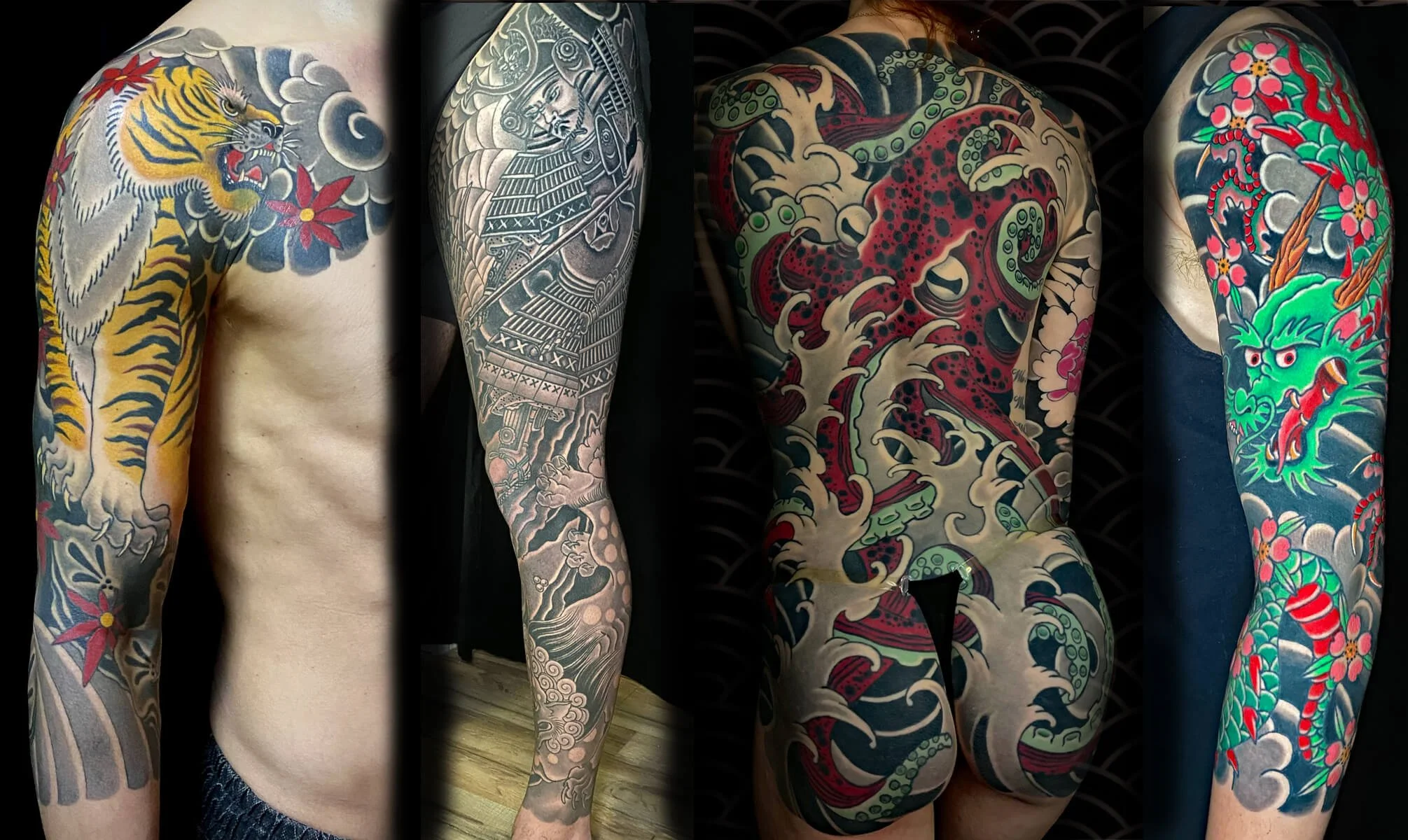
A Japanese tattoo should feel intentional before the needle ever touches the skin. The strongest work is not simply a collection of familiar images - a dragon, a koi, a flower, a mask. It is a considered design built around movement, placement, symbolism, and the person who will wear it. For Japanese tattoos Raleigh NC clients can trust for years, that level of planning makes a real difference.
Japanese tattooing carries a visual language developed through centuries of folklore, art, theater, religion, and printmaking. Whether you are considering a small individual piece or beginning a full sleeve, understanding that language helps you choose imagery with purpose rather than selecting a design because it is popular at the moment.
Start With the Subject, Not Just the Style
Traditional Japanese tattooing, often discussed through terms such as Irezumi, Horimono, and Wabori, is recognized for bold forms, strong contrast, background flow, and cohesive large-scale composition. But the subject matter is equally important. A Japanese tattoo is often built from stories, seasonal references, animals, deities, and legendary figures that carry associations beyond their appearance.
A koi may suggest determination and transformation, particularly through its connection to the legend of swimming upstream. A dragon can represent wisdom, protection, and command over water and the elements. Tigers are associated with courage and protection from misfortune. Peonies, chrysanthemum, maple leaves, and cherry blossoms introduce season, mood, and contrast to the central image.
None of these meanings should be treated as a rigid formula. Context changes the reading of an image. A snake paired with peonies creates a different feeling than a snake shown with wind bars, maple leaves, or a protective deity. The best place to begin is with the subjects, stories, or qualities that genuinely speak to you, then work with an artist who understands how those elements can belong together.
Japanese imagery needs room to move
Japanese tattoo composition is designed around the body, not dropped onto it like a flat illustration. A dragon may turn with the shoulder and upper arm. Waves can carry visual movement around a calf. A sleeve can use flowers, clouds, wind, or water to connect major images while allowing the design to breathe.
This is why a design that looks impressive in a square photo may not be the right answer for your body or your long-term goals. Placement determines scale, direction, detail level, and how a tattoo will connect to possible future work. An experienced Japanese tattoo artist considers the full canvas, even when the first appointment is for one smaller piece.
Japanese Tattoos Raleigh NC Clients Should Plan Carefully
Finding a tattoo artist is easy. Finding an artist dedicated to Japanese tattooing is a more specific search, and it matters when you want a design rooted in the tradition rather than a loose imitation of its surface elements.
A specialist brings focused experience with the imagery, structure, and visual priorities of Japanese work. That includes knowing when a subject calls for a broad, powerful shape instead of excessive detail, how backgrounds support rather than crowd a main figure, and how seasonal motifs can create a coherent setting. It also means understanding that a Japanese sleeve is not merely several tattoos placed on an arm. It is one composition developed across the arm.
Review an artist's portfolio with more than a single favorite image in mind. Look for consistency in drawing, confident linework, readable forms, black and gray balance or color saturation, and tattoos that follow the anatomy naturally. If you are planning a larger project, look at complete sleeves, back pieces, and multi-session work. The artist should be able to show an understanding of how each section relates to the next.
Marco Tengu Tattoo is focused exclusively on custom Japanese tattooing, from individual designs to sleeves, back pieces, and cohesive body work. That dedicated focus gives clients a better starting point for discussing traditional imagery, folklore, placement, and the practical path from first session to finished tattoo.
Choose the Right Scale for Your Commitment
A small Japanese tattoo can be complete and meaningful on its own. A Hannya mask, a small tiger, a flower grouping, a daruma, or a simplified koi may suit a client who wants a focused image without committing to a larger composition. The trade-off is that very small work has less room for layered storytelling and fine detail. Simpler, stronger designs usually age better than an overcrowded miniature scene.
A half sleeve or full sleeve allows more of the Japanese approach to composition. You can establish a main subject and use background, flowers, clouds, waves, or wind to create flow. This scale also gives the artist more room to make transitions feel natural as the tattoo wraps around the arm.
Back pieces and body suits require a different level of patience and planning. They are built over multiple sessions, often over a substantial period of time, and every decision has consequences for the next section. The reward is a visual statement that can carry depth, scale, and continuity that smaller tattoos cannot match. A client does not need to start with a full body suit in mind, but they should be honest about whether a smaller piece may become part of a larger project later.
Meaning Is Stronger When It Has Context
Japanese folklore offers rich material, but it should not be reduced to a quick caption. A Hannya mask, for example, is widely recognized, yet its power comes from a specific theatrical tradition and its expression of jealousy, sorrow, anger, and transformation. Fudo Myoo is not simply an imposing deity image. He is a protective Buddhist figure with particular iconography, including a sword, rope, flames, and a fierce presence.
The same care applies to animals and natural imagery. A phoenix, known as ho-o in Japanese tradition, has associations with renewal and peace. A shishi, often called a lion dog, is a guardian figure. Cherry blossoms can communicate beauty and impermanence, while chrysanthemums can suggest endurance and seasonal change. These meanings are useful starting points, not a substitute for a thoughtful custom design.
Research before your consultation. The Japanese Tattoo Library can help you become more familiar with subjects and terminology, but you do not need to arrive with every answer settled. Bring the images or ideas that have stayed with you, explain why they matter, and be open to professional guidance on what will work best visually.
A Good Consultation Creates a Better Tattoo
The consultation is where interest becomes a workable plan. Be prepared to discuss placement, approximate size, whether you see the tattoo growing in the future, your preferred color approach, and any images you strongly want to include or avoid. It also helps to discuss practical matters plainly: your schedule, your budget for a multi-session project, and how much visibility you are comfortable with in daily life.
Reference images are useful, but they should communicate direction rather than become a request for a copy. A custom tattoo should respond to your anatomy and your ideas. An artist may recommend changing the orientation of a figure, reducing competing elements, increasing the scale, or reserving an area for future work. Those recommendations are part of the design process, not a detour from it.
For appointment-based work, submit a consultation request with clear details and allow time for the design to be properly considered. Limited walk-in availability may be possible by calling ahead, but larger Japanese projects deserve a scheduled conversation and a deliberate plan.
Think Beyond the First Session
Japanese tattooing rewards patience. Large work is not finished in one afternoon, and even a smaller design benefits from careful placement and strong execution. Healing, aftercare, session spacing, and long-term sun protection all affect how the work settles into the skin over time.
The right design is not necessarily the biggest or most complicated one. It is the one that fits your body, reflects your interests, and leaves room for the tattoo to speak clearly. Bring a subject that matters to you, ask informed questions, and choose an artist whose commitment to Japanese tattooing matches the commitment you are ready to make.